
Just a guy in Vermont trying to connect all the dots...

Dan York
Author's posts
Nov 03
DNSSEC and DANE Activities at ICANN 57 in Hyderabad, India, November 4-7, 2016
 Friday marks the beginning of the ICANN 57 meeting in Hyderabad, India. As per usual there will be a range of activities related to DNSSEC or DANE. Two of the sessions will be streamed live and will be recorded for later viewing. Here is what is happening.
All times below are India Standard Time (IST), which is UTC+05:30. (Yes, it is a half-hour off from other timezones.)
DNSSEC For Everybody: A Beginner’s Guide – 4 Nov
On Friday, November 4, 2016, we’ll have our “DNSSEC For Everybody: A Beginner’s Guide” session that will include our usual skit where a bunch of engineers act out how DNS and DNSSEC work! Yes, it’s a good bit of fun and people have told us it has helped tremendously.
- 17:00-18:30 – Hall 2
- More info: https://icann572016.sched.org/event/8cyu/dnssec-for-everybody-a-beginners-guide
- WATCH LIVE: https://participate.icann.org/hyd57-hall2
Please come with your questions and prepare to learn all about DNSSEC!
DNSSEC Implementers Gathering – 6 Nov
On Sunday, November 6, we’ll have our informal “DNSSEC Implementers Gathering” bringing together people who have implemented DNSSEC or DANE in some way for a time to share information, have conversation and light snacks. Invitations have gone out to various DNSSEC mailing lists – if you are interested in attending please send a message to me at york@isoc.org. We thank Afilias for their generous sponsorship of this gathering at ICANN 57!
DNSSEC Workshop – 7 Nov
Our big 6-hour workshop will take place on Monday, November 7, from 09:00 – 15:00 in Room G.03/G.04. Lunch will be included. Thank you to our lunch sponsors: Afilias, CIRA, Dyn and SIDN.
The very full agenda includes:
- DNSSEC Workshop Introduction, Program, Deployment Around the World – Counts, Counts, Counts
- Panel: DNSSEC Activities in the Asia Pacific Region
- Aggressive Use of NSEC/NSEC3
- Panel: Root Key Rollover Discussion – Recursive Resolver Software Readiness
- Demonstration: DNS Operator Interface for DNSSEC
- Research Infrastructure for Internet Naming, Identification, and the DNS
- The Great DNSSEC/DNS Quiz
- Demonstration: Windows Server DNSSEC Functionality
- Demonstration: DNSSEC-S/MIME-DANE Package for Microsoft Outlook
- Secure Mailserver Using DNSSEC/TLSA
- DNSSEC – How Can I Help?
It should be an outstanding session!
- 09:00 – 15:00, Room G.03/G.04
- WATCH LIVE: https://participate.icann.org/hyd57-G3
- More info and slides are available from these URLs (ICANN’s online schedule system breaks it up into sections based on breaks and lunch):
As neither I nor Russ Mundy were able to travel to Hyderabad, I want to personally thank Wes Hardaker and Jacques Latour for stepping in to help with some of the emceeing and other meeting facilitation duties.
Please do join us for a great set of sessions about how we can work together to make the DNS more secure and trusted!
If you would like more information about DNSSEC or DANE, please visit our Start Here page to begin.
Nov 02
NIST Publishes New Guide: “DNS-Based Email Security” about DANE and DNSSEC

How can we make email more secure and trusted? How can we encrypt all email between mail servers? And how can we use DANE and DNSSEC to provide that added layer of security?
Today the U.S. National Cybersecurity Center of Excellence (NCCoE) and the National Institute of Standards and Technology released a “draft practice guide” exploring those exact questions. Titled “Domain Name Systems-Based Electronic Mail Security (NIST Special Publication 1800-6)” the document offers guidance to enterprises and others into “how commercially available technologies can meet an organization’s needs to improve email security and defend against email-based attacks such as phishing and man-in-the-middle types of attacks.” Specifically it gets into how DNSSEC and DANE can be used to authenticate server addresses and the Transport Layer Security (TLS) certificates used for confidentiality.
As NIST states on their web page, the goal of the project around this publication is:
- Encrypt emails between mail servers
- Allow individual email users to digitally sign and/or encrypt email messages
- Allow email users to identify valid email senders as well as send digitally signed messages and validate signatures of received messages
You can download the guide or sections of it from that web page.
NIST is seeking public comments on this new guide from today through December 19, 2016.
It’s great to see NIST publishing this document and we hope everyone reading this post will take a look and spread the word.
And if you are interested in getting started with DNSSEC and DANE, please visit our Start Here page to find resources to help.
Nov 01
In September, Singapore and Senegal Signed Their .SN and .SG with DNSSEC

Congratulations to the teams in both Singapore and Senegal for signing their country-code top-level domains (ccTLDs) with DNSSEC back in September. According to Rick Lamb’s list of DNSSEC-signed TLDs, Singapore’s signature for the .SG domain was added to the root of DNS on September 22, and Senegal’s signature for .SN was added on September 30. [1]
This means that as of those dates, second-level domains under .SG and .SN could start receiving the added layer of security and trust possible with DNSSEC. In Singapore SGNIC started actively encouraging people to sign their domains. In Africa, ICANN’s Yaovi Atohoun wrote about how Senegal is the third African ccTLD to sign with DNSSEC this year.
I also added both countries to our weekly DNSSEC Deployment Maps so people can see them there. (And here’s a test of your geography: where are Senegal and Singapore?)
This is all great news as the world continues to add a layer of trust to answers from DNS by using DNSSEC. Congrats again to the teams in both countries!
If you would like to get started with DNSSEC, please visit our Start Here page to begin.
[1] To be precise, what happened is that the “Delegation Signer” or “DS” records for each TLD were added to the root of DNS. The DS record is a fingerprint of the DNSKEY used to sign the domain. It is included in the parent zone to create a “global chain of trust” from the root of DNS on down.
Nov 01
Writing Every Day of November – the NaNoWriMo and NaBloPoMo Challenges
Today is the day! Every year on November 1 some number of writers across the world challenge themselves to write EVERY SINGLE DAY in November.
Some amazingly choose to focus on writing a novel. They go the "NaNoWriMo" route, a.k.a. "National Novel Writing Month"... where "national" is really any nation in the world. Best place to learn more is the simple address: nanowrimo.org
Given that the target of NaNoWriMo is to write 50,000+ words, that's a serious commitment!
Others of us, and I'll add myself this year, choose to focus instead on writing at least one blog post every day as part of "NaBloPoMo", a.k.a. "National Blog Posting Month".
NaBloPoMo started back in 2006 and since 2011 has been championed by the BlogHer community. BlogHer is supporting NaBloPoMo again in 2016, but it wasn't clear for a while if they were going to do so. Meanwhile, another group at the "Cheerpeppers" site started a "blog once a day" challenge under the name "Nano Poblano".
Regardless, the point is to challenge yourself to write every day.
And of course being in our social world, you can follow along at the hashtags #NaNoWriMo and #NaBloPoMo - and also now #Nanopoblano (the hashtags all link to Twitter here but you can find them used on other social networks as well).
For myself, I am going to give it a try. Writing (and publishing) every day. As I recently wrote, I'm struggling to write consistently... so this provides a goal for me to strive for.
Now, I won't be writing here on Disruptive Conversations every day. My personal goal is publish some article across all my various blogs each day of November. That includes the blogs at the Internet Society, my employer.
You - and I - will be able to track how I am doing at my danyork.me site where I aggregate all my posts across all my sites.
We'll see how I do!
And best wishes to everyone else who are pushing themselves to do one of these challenges this year. Let's see the writing happen!
P.S. I haven't signed up for either the BlogHer or Cheerpeppers challenges. I'm just doing this for me right now.
Oct 31
For Immediate Release #59: Kick Him in the (Virtual) Nuts!
Christopher Barger (Brain+Trust Partners), Gini Dietrich (Arment Dietrich Inc.), and Doug Haslam (Stone Temple Consulting) were on the FIR panel for some conversation about the following topics…
- A study found a correlation between increased investment in CSR activities and profitability.
- Ratings for National Football League broadcasts are way down and a lot of reasons are being cited. A lot of them come down to the NFL’s culture and values.
- Sexism is alive and well — even at the PRSA conference.
- PR agencies aren’t training their staffs to deliver the kind of digital services their clients want.
- Dan York reports on the feud between Twitter and Facebook over live streaming enhancements.
- Twitter is discontinuing Vine, and Vine producers aren’t happy. (Neither is one of Vine’s founders.)
- A study finds CMOs believe Artificial Intelligence will be bigger than social media.
- Apple has dropped a lot of ports customers are accustomed to on its latest MacBook Pro.
Connect with our panelists on Twitter at @cbarger, @ginidietrich, and @dough.
Doug Haslam’s jargon list from this episode:
- Change Agent
- Grok
- Walk the talk
- Talk the talk
- Gak
Links to the source material for this episode are on Contentle.
Special thanks to Jay Moonah for the opening and closing music.
About today’s panel:
 Christopher Barger is a partner at Brain+Trust Partners, an executive consultancy helping leaders manage an evolving marketplace with common sense and strategic guidance. He was previously Senior Vice President of Global Programs at Voce Communications, a Porter Novelli company, helping clients around the world develop and execute social media strategies. Christopher has been in the Porter Novelli family since 2011, arriving after nearly seven years of leading social media programs at Fortune 50 companies, and has a decade and a half’s experience building corporate communications strategies. Before joining PN, Christopher was director of global social media at General Motors, building the company’s social media program and leading its presence across multiple social networks. Christopher also previously managed social media initiatives and corporate communications for IBM, serving from 2005-2007 as that company’s first “Blogger-in-Chief” and playing the pivotal role in the development of IBM’s social media program. Christopher is the author of the book “The Social Media Strategist” (McGraw Hill, 2012).
 Gini Dietrich is the founder and CEO of Arment Dietrich, a Chicago-based integrated marketing communications firm. She is the lead blogger at the PR and marketing blog, Spin Sucks, is co-author of Marketing In the Round, and is co-host of Inside PR, a weekly podcast about communications and social media. Her second book, Spin Sucks, is now available! She speaks, she writes for Crain’s Chicago Business and other publications.

Doug Haslam’s career has spanned a variety of disciplines within the communications field: radio technology, editorial production, public relations, marketing, social media and digital. Currently a senior consultant with Stone Temple Consulting, Doug began with public radio, producing news and thoughtful sports programs, moving into technology public relations, and currently to social media and content strategy for brands of all sizes and industries. Doug’s love of media has come full circle, as his most recent positions have seen him taking full advantage of his content creation skills, managing social media and brand publishing programs for a wide variety of clients.
The post FIR #59: Kick Him in the (Virtual) Nuts! appeared first on FIR Podcast Network.
Oct 27
Watch Live TODAY – DNSSEC Root KSK Ceremony at 17:00 UTC

Today a critical part of DNS security – DNSSEC – will receive a major update, and you can watch it all live at starting at 17:00 UTC (1:00pm US EDT – local time) streaming out of ICANN’s data center in Virginia:
https://www.iana.org/dnssec/ceremonies/27
Olaf Kolkman, our CITO, will be in attendance as a “Crypto Officer” (key holder). Olaf wrote a post with info about the 25th key ceremony back in May 2016 and shared some of his photos.
The important step today is that this key ceremony will involve the creation of a new Key Signing Key (KSK) for the root of DNS. This begins what will be a year-long process of “rolling over” the cryptographic key at the heart of the DNSSEC system. ICANN has a page dedicated to the “Root KSK Rollover” explaining the details – and this “at-a-glance” PDF provides the key facts and dates.
This is a great step in making DNSSEC even more secure.
If you’re interested, ICANN posts the “script” that will be used to go through today’s key ceremony. All of the key ceremonies are streamed live and archived for later viewing.
If you want to learn more about DNSSEC in general, please visit our Start Here page to find resources to help!
Image credit – Olaf Kolkman on Flickr. Used with permission.
Oct 25
How To Survive A DNS DDoS Attack – Consider using multiple DNS providers
How can your company continue to make its website and Internet services available during a massive distributed denial-of-service (DDoS) attack against a DNS hosting provider? In light of last Friday’s attack on Dyn’s DNS infrastructure, many people are asking this question.
One potential solution is to look at using multiple DNS providers for hosting your DNS records. The challenge with Friday’s attack was that so many of the affected companies – Twitter, Github, Spotify, Etsy, SoundCloud and many more – were using ONLY one provider for DNS services. When that DNS provider, Dyn, Inc, then came under attack, people couldn’t get to the servers running those services. It was a single point of failure.
Dan York
Oct 25
Audio Interview: Mozilla’s Nils Ohlmeier about Firefox and WebRTC
Want to learn the latest about WebRTC inside of Firefox? Nils Ohlmeier from Mozilla sat down for an interview at the IIT RTC Conference last week with Mark Fletcher of the Avaya Podcast Network. I found it quite a useful explanation of what Mozilla is doing with Firefox and how different aspects of WebRTC come into play in different parts of Firefox. Give it a listen...
Oct 24
How To Survive A DNS DDoS Attack – Consider using multiple DNS providers
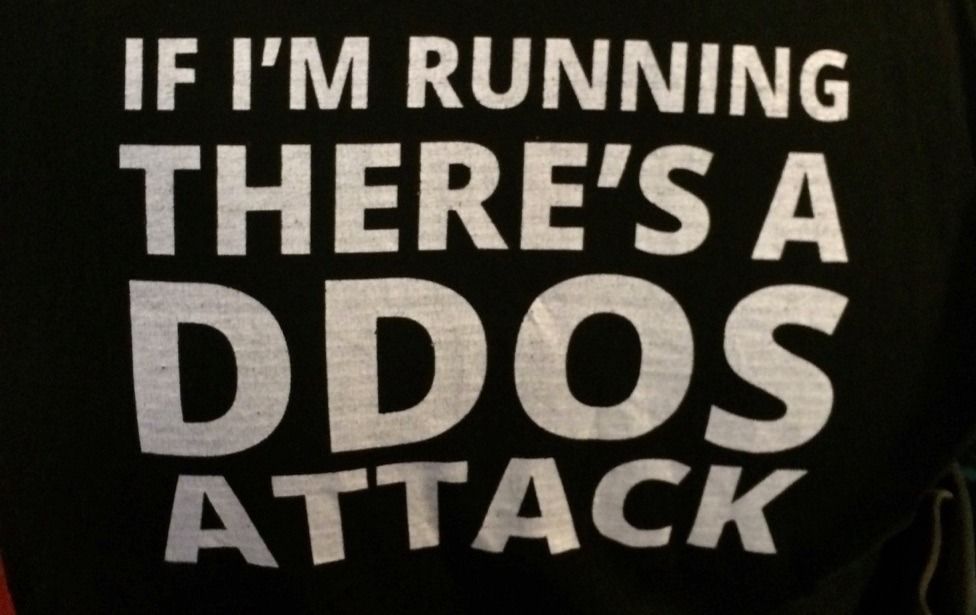
How can your company continue to make its website and Internet services available during a massive distributed denial-of-service (DDoS) attack against a DNS hosting provider? In light of last Friday’s attack on Dyn’s DNS infrastructure, many people are asking this question.
One potential solution is to look at using multiple DNS providers for hosting your DNS records. The challenge with Friday’s attack was that so many of the affected companies – Twitter, Github, Spotify, Etsy, SoundCloud and many more – were using ONLY one provider for DNS services. When that DNS provider, Dyn, then came under attack, people couldn’t get to the servers running those services.  It was a single point of failure.  
You can see this yourself right now. If you go to a command line on a Mac or Linux system and type “dig ns twitter.com,”[1] the answer you will see is something like:
twitter.com.	10345  IN  NS   ns4.p34.dynect.net.
twitter.com.	10345  IN  NS   ns3.p34.dynect.net.
twitter.com.	10345  IN  NS   ns1.p34.dynect.net.
twitter.com.	10345  IN  NS   ns2.p34.dynect.net.
What this says is that Twitter is using only Dyn. (“dynect.net” is the domain name of Dyn’s “DynECT” managed DNS service.)
Companies using Dyn who also used another DNS provider, though, had less of an issue. Users may have experienced delays in initially connecting to the services, but they were still able to eventually connect.  Here is what Etsy’s DNS looks like after Friday (via “dig ns etsy.com”):
etsy.com.	9371  IN  NS   ns1.p28.dynect.net.
etsy.com.	9371  IN  NS   ns-870.awsdns-44.net.
etsy.com.	9371  IN  NS   ns-1709.awsdns-21.co.uk.
etsy.com.	9371  IN  NS   ns3.p28.dynect.net.
etsy.com.	9371  IN  NS   ns-1264.awsdns-30.org.
etsy.com.	9371  IN  NS   ns-162.awsdns-20.com.
etsy.com.	9371  IN  NS   ns4.p28.dynect.net.
etsy.com.	9371  IN  NS   ns2.p28.dynect.net.
Etsy is now using a combination of Dyn’s DynECT DNS services and Amazon’s Route 53 DNS services.
But wait, you say… shouldn’t this be “DNS 101”?
Aren’t you always supposed to have DNS servers spread out across the world?
Why don’t they have “secondary DNS servers”?
Isn’t that a common best practice?
Well, all of these companies did have secondary servers, and their DNS servers were spread out all around the world. This is why users in Asia, for instance, were able to get to Twitter and other sites while users in the USA and Europe were not able to do so.
So what happened? 
It gets a bit complicated.
20 Years Ago…
Jumping back, say, 20 years or so, it was common for everyone to operate their own “authoritative servers” in DNS that would serve out their DNS records. A huge strength of DNS that it is “distributed and de-centralized” and anyone registering a domain name is able to operate their own “authoritative servers” and publish all of their own DNS records. 
To make this work, you publish “name server” (“NS”) records for each of your domain names that list which DNS servers are “authoritative” for your domain. These are the servers that can answer back with the DNS records that people need to reach your servers and services. 
You need to have at least one authoritative server that would give out your DNS records. Of course, in those early days if there was a problem with that server and it went offline, people would not be able to get the DNS records that would get them to your other computers and services.  Similarly you could have a problem with your connection to the Internet and people could not get to your authoritative server.
For that reason the best practice emerged of having a “secondary” authoritative DNS server that contained a copy of all of the DNS records for your domain. The idea was to have this in a different geographic location and on a different network.
On the user end, we use what is called a “recursive DNS resolver” to send out DNS queries and get back the IP addresses that our computers need to connect. Our DNS resolvers will get the list of name servers (“NS records”) and choose one to connect to. If an answer doesn’t come back after some short period of time, the resolver will try the next NS record, and the next… until it runs out of NS records to try. 
Back in July 1997, the IETF published RFC 2821 dedicated to this topic: Selection and Operation of Secondary DNS Servers. It’s fun to go back and read through that document almost 20 years later as a great bit has changed. But back in the day, this was a common practice:
 The best approach is usually to find an organisation of similar size, and agree to swap secondary zones – each organization agrees to provide a server to act as a secondary server for the other organisation’s zones. 
As noted in RFC 2821, it was common for people to have 2, 3, 4 or even more authoritative servers. One would be the “primary” or master server where changes were made – the others would all be “secondary” servers grabbing copies of the DNS records from the primary server.
Over the years, companies and organizations would spend a great amount of time, energy and money building out their own DNS server infrastructure.  Having this kind of geographic and network resilience was critical to ensure that users and customers could get the DNS records that would get them to the organizations servers and services.
The Emergence of DNS Hosting Providers
But most people really didn’t want to run their own global infrastructure of DNS servers. They didn’t want to deal with all the headaches of establishing secondary DNS servers and all of that. It was costly and complicated – and just more than most companies wanted to deal with. 
Over time companies emerged that were called “DNS hosting providers” or “DNS providers” who would take care of all of that for you. You simply signed up and delegated operation of your domain name to them – and they did everything else. 
The advantages were – and are today – enormous. Instead of only a couple of secondary DNS servers, you could have tens or even hundreds.  Technologies such as anycast made this possible. The DNS hosting provider would take care of all the data center operation, the geographic diversity, the network diversity… everything.  And they provided you with all this capability on a global and network scale that very few companies could provide all by themselves. 
The DNS hosting providers gave you everything in the RFC 2821 best practices – and so much more!
And so over the past 10 years most companies and people moved to using DNS hosting providers of some form. Often individuals simply use the DNS hosting provided by whatever domain name registrar they use to register their domain name.  Companies have outsourced their DNS hosting to companies such as Dyn, Amazon’s Route 53, CloudFlare, Google’s Cloud DNS, UltraDNS, Verisign and so many more. 
It’s simple and easy … and probably 99.99% of the time it has “just worked”.
And you only needed one DNS provider because they were giving you all the necessary secondary DNS services and diversity protection.
Friday’s Attack
Until Friday. When for some parts of the Internet the DNS hosting services of Dyn didn’t work. 
It’s important to note that Dyn’s overall DNS network still worked. They never lost all their data centers to the attack. People in some parts of the world, such as Asia, continued to be able to get DNS records and connect to all the affected services without any issues.
But on Friday, all the many companies and services that were using Dyn as their only DNS provider suddenly found that a substantial part of the Internet’s user community couldn’t get to their sites. They found that they were sharing the same fate as their DNS provider in a way that would not have been true before the large degree of centralization with DNS hosting providers.
Some companies, like Twitter, stayed with Dyn through the entire process and weathered the storm. Others, like Github, chose to migrate their DNS hosting to another provider.  Still others chose to start using multiple DNS providers. 
Why Doesn’t Everyone Just Use Multiple DNS Providers? 
This would seem the logical question.  But think about that for a second – each of these major DNS providers already has a global, distributed DNS architecture that goes far beyond what companies could provide in the past.
Now we want to ask companies to use multiple of these large-scale DNS providers?
I put this question out in a number of social networks and a friend of mine whose company was affected nailed the issue with this comment:
Because one DNS provider, with over a dozen points-of-presence (POPs) all over the world and anycast, had been sufficient, up until this unprecedented DDoS. We had eight years of 100% availability from Dyn until Friday. Dealing with multiple vendors (and paying for it) didn’t have very good ROI (and I’m still not sure it does, but we’ll do it anyway). 
Others chimed in and I can summarize the answers as:
- CDNs and GLBs – Most websites no longer sit on a single web server publishing a simple set of HTML files. They are large complex beasts pulling in data from many different servers and sites. And they very often sit behind content delivery networks (CDNs) that cache website content and make it available through “local” servers or global load balancers (GLBs) that redirect visitors to different servers. Most of these CDNs and GLBs work by using DNS to redirect people to the “closest” server (chosen by some algorithm). When using a CDN or GLB, you typically wind up having to use only that service for your DNS hosting.  I’ve found myself in this situation with a few of my own sites where I use a CDN.
- Features – Many companies use more sophisticated features of DNS hosting providers such as geographic redirection or other mechanisms to manage traffic. Getting multiple providers to modify DNS responses in exactly the same way can be difficult or impossible.
- Complexity – Beyond CDNs and features, multiple DNS providers simply adds complexity into IT infrastructure. You need to ensure both providers are publishing the same information, and getting that information out to providers can be tricky in some complex networks.
- Cost – The convenience of using a DNS hosting provider comes at a substantial financial cost. For the scale needed by major Internet services, the DNS providers aren’t cheap. 
For all of these reasons and more, it’s not an easy decision for many sites to move to using multiple DNS providers.
It’s complicated.
And yet… 
And yet the type of massive DDoS attacks we saw on Friday may require companies and organizations to rethink their “DNS strategy”. With the continued deployment of the Internet of Insecure Things, in particular, these type of DDoS attacks may become worse before the situation can improve. (Please read Olaf Kolkman’s post for ideas about how we move forward.) There will be more of these attacks.
As my friend wrote in further discussion:
  These days you outsource DNS to a company that provides way more diversity than anyone could in the days before anycast, but the capacity of botnets is still greater than one of the biggest providers, and probably bigger than the top several providers combined.
 And even more to the point:
  The advantage of multiple providers on Friday wasn’t network diversity, it was target diversity.
The attackers targeted Dyn this time, so companies who use DNS services from Amazon, Google, Verisign or others were okay.  Next time the target might be one of the others. Or perhaps attackers may target several.
The longer-term solutions, as Olaf writes about, involve better securing all the devices connected to the Internet to reduce the potential of IoT botnets. They involve the continued work collaboratively to reduce the effects of malware and bad routing info (ex. MANRS).  They involve the continued and improved communication and coordination between network operators and so many others.
But in the meantime, I suspect many companies and organizations will be considering whether it makes sense to engage with multiple DNS providers.  For many, they may be able to do so. Others may need the specialized capabilities of specific providers and find themselves unable to use multiple providers. Some may not find the return on investment warrants it. While others may accept that they must do this to ensure that their services are always available.
Sadly, taking DNS resilience to an even higher level may be what is required for today.
What do you think? Do you use multiple DNS providers?  If so, what worked for you? If not, why not? I would be curious to hear from readers, either as comments here or out on social networks.
 
[1] Windows users do not have the ‘dig’ command by default. Instead you can type “nslookup -type=NS <domainname>”. The results may look different that what is shown here, but will have similar information.
NOTE: I want to thank the people who replied to threads on this topic on Hacker News, in the /r/DNS subreddit and on social media. The comments definitely helped in expanding my own understanding of the complexities of the way DNS providers operate today.
Image credit: a photo I took of a friend’s T-shirt at a conference.
The post How To Survive A DNS DDoS Attack – Consider using multiple DNS providers appeared first on Internet Society.