
Just a guy in Vermont trying to connect all the dots...

Dan York
Author's posts
Sep 20
Evernote Destroys The Old Skitch With New 2.0 "Update"
This morning brings a collective "What the ______?" moment to the world of many Mac OS X users as we try to absorb the impact of the new Skitch 2.0 released by Evernote. Perhaps the reaction is best summarized by tweets like this:
[Screenshot of that tweet taken, by the way, with Skitch 1.0, immediately resized by dragging the corner, and dragged/dropped into MarsEdit where I'm writing this post.]
And articles are popping up on this same theme:
- TUAW: Skitch 2.0 is like Skitch 1.0 without all those pesky "features"
- TechCrunch: When Updates Make Things Worse: Evernote’s Skitch 2.0
Evernote's support forums are full of criticism and tweets are exploding with commentary.
Perhaps more importantly for Evernote, existing users are well on the way to decimating the app's ranking in the MacOS X AppStore:
Note the difference from before - and realize that those 200 one-star ratings at the bottom includes the 135 from above. So basically you are seeing a complete inversion of the app ranking going on right now.
There is somewhat of an irony to this as Skitch is getting heavy rotation right now as a "featured" app in the Mac AppStore.
A Very Happy - And Paying - Skitch v1.x User
I should preface these comments by saying that I have valued Skitch so much over the years that I have been a paid "Skitch Plus" user. I am also a paying user of Evernote. So this is not a rant of someone who expects something for free. I've paid for this software because it is so crucial to what I do.
Skitch is one of the applications that I use each and every day. Constantly. I take screenshots for blog posts and articles. I resize images and change their formats. I drop them into PowerPoint presentations. If I have a JPG and need a PNG, I drag an image into Skitch v1, change the format and drag it back out. If I want to crop an image, it's a simple action. If I want to show someone remote something on my screen, I snap it and then copy/paste the URL into an IM or email message (or tech support web forum).
I use Skitch all... the... time!
And over the years I have turned many people on to the tool... as have many others judging my the fact that there have now been over 10 million downloads. Skitch has been truly one of the absolute best tools for Mac OS X.
The "Paring Down"
The issue is that Evernote didn't just "update" the application - they pretty much recreated the user interface. As they state in the blog post:
We pared the application down to it’s most-loved, most-used, most-essential features, then made those features as great as they could be. We also focused on creating a unified experience across all platforms. So, whether you’re using Skitch on your desktop or mobile phone, you’ll know exactly what to do.
The problem is that the list of "most-loved, most-used, most-essential" features apparently doesn't include the ones that many of us use. :-(
As an example, here are four features I use the most that are simply gone:
Ability to rapidly resize images - In Skitch 1.0, all you did was go to the lower right corner of the window and start dragging it. Boom! Resized image. Super simple. Super FAST! Truly awesome.
Now it's hidden under Tools->Crop/Resize where you have to go through a dialog box to do the editing. Also, it seems I no longer can enter numerical values if I have an exact size I want to enter. (At least, I couldn't find it.)
So what was an instant task now becomes a series of dialog boxes and menu choices (or pressing "Option+Command+K" to get to the window).
Ability to rapidly crop images - In Skitch 1.0, all you had to do was go to one of the sides or corners of the image and start dragging to crop an image. Super simple. Super FAST! Truly awesome.
Now you have to go yet again into this Crop/Resize dialog box and go through the steps.
Ability to rapidly change image types - In Skitch 1.0, there is this wonderful drop-down menu box that lets you choose the type of file you want to export:
With this one menu, you can export an image to whatever format you want. If I want a JPG, PNG, TIF or even a PDF. Just choose the type and drag away:
Super simple. Super FAST! Truly awesome.
Now this, too, requires additional steps. You have to go to File->Export where you then go through the standard Mac OS X dialog box to save the file. The choices have also been dropped to PNG, JPEG, TIFF, GIF and BMP... although those were honestly the ones I pretty much always used.
Ability to take a timed screenshot - In Skitch 1.0 there was this truly awesome capability where you could hold down the Shift key while taking a screen shot to get a countdown timer:
This is tremendously helpful if you want to do a screenshot of a menu command, a pop-up or hovering menu, or just anything you want to re-create using the pointer.
In Skitch v2.0 I can't find this feature at all.
These are just four of the features that I commonly use that I have seen in the 2.0 version after I upgraded one of my systems. The forums are full of other features people used... the menu bar icon... custom hotkeys... the ability to share to your own SFTP server... the list goes on...
Destroying the Speed
Now, as I noted, with the exception of the timed screenshot these "features" are not truly "gone" from Skitch 2.0. They are just now buried in menus and take extra steps.
And that's the point.
The most awesome part about Skitch was that it was insanely FAST.
In a few moments I could have screenshots that were resized, cropped, annotated and then dropped into articles or shared online. Simple. Fast.
And that's gone.
Did We Ask For A Unified Experience?
Why would Evernote do this to Skitch?
I think the answer can be found in part of that blog post that I quoted earlier:
We also focused on creating a unified experience across all platforms. So, whether you’re using Skitch on your desktop or mobile phone, you’ll know exactly what to do.
And therein lies the problem.
I completely understand what they are trying to do - and on one level I applaud them for trying. Make it so that an app can work on the iPad and iPhone very much like the app on Mac OS X. Provide a common look-and-feel so that users can move between them easily. Even better, with Evernote syncing (more on that below) you can edit and use the same images across your different devices.
A very solid strategy that sounds great on so many levels. Consistent user experience. Consistent support requirements (ex. documentation, tech support, etc.)
It's a perfect plan..... for a new application.
And for new users.
Anyone completely new to Skitch will probably try out the app and perhaps love it.
The problem is that to get to that "unified experience", the Evernote/Skitch team had to pare down the Mac OS X app... to get it down to the least common denominator across all the various platforms.
And so we who had come to love Skitch on Mac OS X so much have to lose many of the features that were the reasons why we used Skitch in the first place... so that iPhone/iPad users can have a consistent user interface.
The Evernote Connection
One of the big features of this Skitch 2.0 release is that all your snaps are stored in Evernote. In fact, you can't store them anywhere else... gone is the ability to (S)FTP images to another server. No more WebDAV... no more Flickr support... it's all stored in Evernote. (Well, you can choose NOT to use Evernote and only store your images locally, but the only way to put the images up online where you can share them is through using Evernote.)
This makes sense from Evernote's point-of-view and may very well be attractive to many users.
For me personally, though, there's this basic issue:
I do not need (or want) to store my images!
The vast majority of time my usage of Skitch is to take a fast screenshot to drop into an article, blog post or presentation.
They are disposable images.
I don't need to save them... or in fact I have saved them by using them in an article or presentation. But the image itself is no longer necessary.
So why do I want to clutter up my Evernote account with these unwanted images?
Now I guess that if I proceed with the upgrade I'll have to plan some time to go in and occasionally delete out all the useless images.
I will admit that in some situations it would be helpful to be able to obtain the image from other systems... so I can see some value in the Evernote sync. But I still can't think why I want all my images in Evernote.
What's Next?
So now what?
I should note that Skitch 2.0 does bring some new features that are positive:
- The new "pixelate" tool is something that I've wished Skitch would have for ages. It's excellent to see! (Although I can't seem to figure out how to undo/remove pixelation once it's done. The standard "Undo" command doesn't seem to remove it.)
- The highligher tool is another excellent addition.
- The way you can change the font size by dragging is nice.
- The simple sharing to Twitter and Facebook is welcome.
- As noted earlier, the Evernote sync (and search) may be welcome by some.
Will we as users come to appreciate those features as being useful enough to warrant all that is lost? Will the Evernote team come out with a 2.1 release that adds some of these features that we all are missing?
We've certainly seen other companies make similar moves. Apple did it with iMovie many years back and then recently with Final Cut Pro. Skype made a huge change with move from 2.8 to 5.x on the Mac. Twitter completely rewrote Tweetdeck. In all those cases a great amount of functionality was lost even while new features were added.
New users of Skitch may again find much to like in the new capabilities.
But what about the long-time users? Will they stick around to see if a newer version of Skitch 2.x comes out? Or, as I'm seeing in the Twitter stream, will people search for alternatives:
For me, I'm sticking with Skitch v1.x on my primary laptop where speed is essential. On another system I use less I've made a backup copy of Skitch 1.x but then have gone ahead and upgraded to Skitch 2.0. I'll try it out and see if I can learn to like it (really not sure on that) - plus I can use the pixelate tool.
But... if some other tool does pop up that delivers the power and speed of the original Skitch, I could very easily see myself moving to that other tool.
This "upgrade" has completely burned any loyalty I had to Skitch... and I can no longer really recommend it as strongly as I once did.
It's too bad. Skitch is a truly awesome tool that is an integral part of my daily workflow. It's truly disappointing to see all that power and speed destroyed for the sake of trying to get to a unified cross-platform experience.
What about you? Are you disappointed in this new release? Or do you like the new Skitch 2.0? Are you going to stick with it? Or hunt for a new alternative?
P.S. All the images used in this post were touched by Skitch v1.x. The two tweets and the AppStore image were taken using Skitch, resized and dragged out of Skitch. The three images of Skitch itself were taken with the native Mac OS X screenshot keyboard shortcut that dropped an image on the desktop. I then dragged those screenshots from the desktop (individually) into Skitch where I then cropped, resized and annotated (in one case) the images before dragging them out to MarsEdit for this post. Super simple. Super fast. Truly awesome!
If you found this post interesting or useful, please consider either:
- following me on Twitter;
- adding me to a circle on Google+;
- subscribing to my email newsletter; or
- subscribing to the RSS feed.
Sep 19
ARIN Enters Phase 2 of IPv4 Countdown – Only 3 /8 Blocks Left
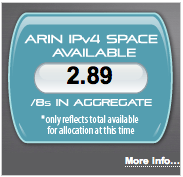 Today marked another milestone in the ongoing exhaustion of IPv4 addresses – the American Registry for Internet Numbers (ARIN) entered Phase 2 of its IPv4 Countdown Plan meaning that it has only 3 “/8″ blocks of IPv4 addresses left. In fact, the counter on ARIN’s Countdown page shows only 2.89 /8 blocks left.
On a practical level, what this means is that if you want a large block of IPv4 addresses from ARIN, your request will go through a more involved review process and may incur time delays in processing. Essentially ARIN is starting to get ready and test out their review processes for when they hit their final “/8″ block, as RIPE NCC recently did, where the review process will be even more strenuous.
All of this is just another part of the last dance of IPv4… and is yet another reason why you need to be looking at how your organization is moving to IPv6 if you have not already done so.
The time is now! Check out our IPv6 resources. Or let us know if you can’t find what you are looking for. And just do it!
How can we help you get started?
Sep 18
How WebRTC Will Fundamentally Disrupt Telecom (And Change The Internet)
 If we step back to before 1993, publishing and finding content on the Internet was a somewhat obscure, geeky thing that a very few people cared about and very few knew how to do. It involved gopher servers, ftp sites, archie, veronica, WAIS, USENET newsgroups, etc., and this "World-Wide Web" service primarily demonstrated via the server at info.cern.ch. It was an amazing period of time for those of us who were there, but the number of users was quite small.
Then NCSA released Mosaic in 1993 ... and suddenly everything changed.
Anyone could create a web page that "regular" people could see on their computers. Anyone could download Mosaic and use it. Anyone could share their sites with the installation of server software.
The Web was truly born into public consciousness... the creation of Web-based content was democratized so that anyone could do it... the creativity of developers was unleashed... a zillion new business models were thought of... and the Internet fundamentally changed.
Fast-forward to today...
... and the "Web" is still predominantly a document-based system. You make HTTP queries to retrieve pages and send HTML and XML documents back and forth between web browsers and web servers.
Separately, we have a world of telecommunication apps that have moved to IP. These are not just voice, but they are also video, instant messaging, data-sharing. They have moved so far beyond what we traditionally think of as "telecommunications". The apps use wideband audio, HD video, white boarding, sharing and so many capabilities that cannot have even been remotely imagined by the creators of the PSTN and all the legacy telcos and carriers. They are "rich communications" applications that have severely disrupted the traditional telco world.
The problem is that creating those rich, real-time communications apps is somewhat of a black art.
It is the realm of "telephony developers" or "VoIP developers" who can understand the traditional world of telcos and can interpret the seven zillion RFCs of SIP (as all the traditional telcos have glommed all sorts of legacy PSTN baggage onto what started out as a simple idea).
Deploying those rich communication apps also involves the step of getting the application into the hands of users. They have to download an application binary - or install a Flash app or Java plugin into their browser. Or on a mobile device install an app onto their mobile smartphone.
The world of rich communication experiences is held back by development problems and deployment problems.
Enter WebRTC/RTCWEB
Suddenly, any web developer can code something as easy as this into their web page:
------
$.phono({
   onReady:   function()   {
       this.phone.dial("sip:9991443046@sip.example.net")
 } } );
------
Boom... they have a button on their web page that someone can click and initiate a communications session ... in ANY web browser. [1 - this is not pure "WebRTC" code... see my footnote below.]
Using JavaScript, that pretty much every web developer knows... and using the web browsers that everyone is using.
And without any kind of Flash or Java plugins.
Boom... no more development problems. Boom... no more deployment problems. [2]
WebRTC is about baking rich, real-time communications into the fabric of the Web and the Internet so that millions of new business models can emerge and millions of new applications can be born.
It is about unleashing the creativity and talent of the zillions of web developers out there and turning the "Web" into more than just a document-based model but instead into a rich communications vehicle. It's about moving these apps from an obscure art into a commonplace occurrence.
We really have absolutely no idea what will happen...
... when we make it as simple for ANY developer to create a rich, real-time communications experience as it is to create a web page.
But we're about to find out... and done right it will fundamentally change the Internet again.
If we think the legacy telco crowd are upset now about how "VoIP" has screwed them over (from their point of view), they haven't seen anything yet. WebRTC/RTCWEB doesn't need any of their legacy models. It bypasses all of that in ways that only the Internet enables. It is NOT shackled to any legacy infrastructure - it can use new peer-to-peer models as well as more traditional models. And it goes so far beyond what we think of as "communication" today. [3]
I see it as the next stage of the evolution of the Internet, disrupting to an even greater degree the business models of today and changing yet again how we all communicate. The Internet will become even more critical to our lives in ways we can't even really imagine.
THAT is why RTCWEB (in the IETF) and WebRTC (in W3C) are so critically important ... and so important to get deployed.
[1] The code I'm showing is for a library, "Phono", that in fact will sit on top of the WebRTC/RTCWEB protocols. It is an example of the new apps and business models that will emerge in that it makes it simple for JavaScript developers to create these apps. Underneath, it will use the rich communications protocols of WebRTC/RTCWEB. Someone else will come up with other ways to do this in JavaScript... or python... or ruby... or whatever language. But because they will all use the WebRTC/RTCWEB protocols, they will interoperate... and work in any browser.
In full disclosure I should also note that Phono is a service of Voxeo, my previous employer.
[2] And BOOM... there go the heads exploding within the legacy telco crowd when they start to fully understand how badly the Internet has rendered them even MORE irrelevant!
[3] Note that a WebRTC app certainly can communicate with the traditional PSTN or other legacy systems. My point is that it is not required to do so. One usage of WebRTC will, I'm sure, be to "web-enable" many VoIP systems (ex. IP-PBXs) and services. But other uses will emerge that are not connected at all to the PSTN or any legacy systems.
Image credit: dmosiondz on Flickr
If you found this post interesting or useful, please consider either:
- following me on Twitter;
- adding me to a circle on Google+;
- subscribing to my email newsletter; or
- subscribing to the RSS feed
Sep 17
FIR #669 – 09/17/12 – For Immediate Release
Twitter handle now @FIRpodcast; FIR Book Review coming; Dr. Pepper vs creationists on Facebook; James Bond trades Martini for Heineken; FCC chairman blows tweetchat; 'kerfuffle' the best word ever; Ragan promo; social media and diplomacy; Michael Netzley's Asia report; Media Monitoring Minute; Deloitte's social technologies report; listener comments; welcome to the #SocialEra; TemboSocial promo; Dan York's report; what makes content marketing succeed; music from The Revivalists; and more.
Sep 11
Tor (The Onion Router) Expands IPv6 Support in 0.2.4.1-alpha
 Last week the Tor Project announced a new alpha release 0.2.4.1 that includes as one of its major features expanded support for IPv6. From the release notes:
- Bridge authorities now accept IPv6 bridge addresses and include them in network status documents. Implements ticket 5534.
- Clients who set “ClientUseIPv6 1″ may connect to entry nodes over IPv6. Set “ClientPreferIPv6ORPort 1″ to make this even more likelyto happen. Implements ticket 5535.
- All kind of relays, not just bridges, can now advertise an IPv6 OR port. Implements ticket 6362.
- Directory authorities vote on IPv6 OR ports using the new consensus method 14. Implements ticket 6363.
This builds on an earlier 0.2.39 alpha in December 2011 that introduced initial IPv6 support and follows on some plans for IPv6 support written earlier in 2011.
If you are not familiar with the Tor Project it is a widely used tool for protecting your privacy and enabling anonymous use of the Internet without being tracked. The history of Tor is quite interesting because it originated with a desire within the U.S. Navy to protect online government communications but today is used by many people who want to access Internet services without exposing their identity and/or location.
Tor has many uses across a wide range of fields… and now, at least in an early release version, it can work even better across IPv6!
Sep 11
Can You Add 1 Line of HTML To Your Site To Help Measure DNSSEC Usage?
 Can you please help out with efforts to measure the number of DNSSEC-validating DNS resolvers out there?
The folks at Verisign Labs are conducting some research into trying to understand what level of DNSSEC-validating resolvers are out on the open Internet. This is critical to understand as the availability of DNSSEC-validating resolvers is a key piece of getting DNSSEC deployed.
They are asking for your help.
If you operate a website, they are asking if you can please add one line of HTML to your site, preferably in a page header, footer, sidebar or other component that gets frequently loaded:
<a href=”http://prefetch.validatorsearch.verisignlabs.com”></a>
That’s it! As they say on their page:
This HTML snippet should have no visible impact on a rendered page. Since nearly all web browsers now implement DNS prefetching, the code above results in a DNS query for the name shown and allows us to characterize the recursive name server that the query goes through.
They also mention that you can alternatively modify the HEAD element of your page to include this one line of code:
<link rel=”prefetch” href=”http://prefetch.validatorsearch.verisignlabs.com” />
I’ve chosen this latter approach here at Deploy360 and as a result visitors to our site will be helping with this important research. If we can get more sites adding this code, Verisign Labs can get that many more data points feeding in and helping them characterize the level of DNSSEC validating resolvers out there.
Here at Deploy360, we are in favor of research like this because we’d like to get a baseline now and then see trends over time. Encouraging the wider deployment of DNSSEC-validating resolvers by ISPs and other network operators is one of the key activities we are planning to work on over the next 12 months – and this research will help us and many others understand how successful we are collectively in encouraging that deployment.
Can you please help you by adding a line of code to your site? (Thanks!)
P.S. For those curious to learn more about “DNS prefetching” (also called “pre-resolving” by some) and how this research works, here are some articles you may find of interest:
- Chromium Project: DNS Prefetching and related blog post from September 2008
- Mozilla Firefox: Controlling DNS prefetching and an explanation in a blog post
- Microsoft IE: Internet Explorer 9 Network Performance Improvements (“DNS pre-resolution” discussed later in the article)
- Fascinating cautionary tale: “DNS Prefetching Implications” about how the way a site/service was constructed had implications that caused prefetching to incur significant costs for the company.
Sep 10
FIR #668 – 09/10/12 – For Immediate Release
New Speaker and Speeches available; CW Bulletin addresses Wikipedia; Quick News: Connectify gets Kickstarter funding, Kred rolls out Salesforce.com integration, WordPress live-blogging plugin released, content marketing budgets rise; Ragan promo; News That Fits: information overload was a myth, Dan York's report, Media Monitoring Minute, the PR war over fracking, listener comments, communications planning needs to account for two screens, TemboSocial promo, Michael Netzley's Asia report, BBC guidance on headline-writing SEO; music from Annie Stevenson; and more.
Sep 07
Speaking in Montenegro about DNSSEC on September 12
 On Wednesday of this week I’ll be speaking about DNSSEC at the 5th international conference for ccTLD registries and registrars of CIS, Central and Eastern Europe in Budva, Montenegro. I’m very much looking forward to this event as it is entirely focused around the concerns of registries and registrars – and they are one of the key groups who can accelerate the deployment of DNSSEC. In fact, you can see DNSSEC come up a few times on the agenda – and I’m looking forward to hearing the case study of the .UA deployment of DNSSEC.
My session on Wednesday is titled “Key Steps in Accelerating DNSSEC Deployment” and for the registries and registrars the steps really can be ultimately reduced down to these:
- Registries need to make it as simple as possible for registrars to upload DS (Delegation Signor) records into the registries’ zones.
- Registrars need to make it as simple as possible for DNS hosting providers to upload DS records into the registrars databases.
Those two steps right there would greatly accelerate the deployment of DNSSEC in those ccTLDs.
That’s not all I’ll talk about, of course. I’m also going to be discussing the growth of the .NL signed domains as that example may be something some of the ccTLDs can replicate. I’ll be talking about how the ongoing work with DANE securing SSL/TLS certificates via DNSSEC should spur enterprise interest in deployment. I’ll be providing some examples of a good user experience … and much more. I’ll be making the slides available later and potentially an audio or video recording if I am able to do so.
The main point of my attendance, too, is to interact with registries and registrars and find out what we can do to make it easier for them to deploy DNSSEC. That feedback will certainly help our DNSSEC content roadmap and help us prioritize what materials we are creating first.
If you attending the event I look forward to meeting up with you, and I look forward to learning from those there about DNSSEC – and all the other issues – in the Central and Eastern European region.
Sep 07
New Mailing List for “Migrating Apps to IPv6” Updates
 Would you like to be notified when updates are made to “Migrating Applications to IPv6“? If so, there’s a nifty little sign-up box over in the right sidebar that will add you to an email distribution list that I will use ONLY to alert you to news about the book. Info about updates will also be posted here to the book’s blog, of course, and will also appear on the Google+ page and in my normal Twitter stream. But I realized recently that some readers might want to receive specific messages when updates are available. If you purchase the ebook directly from O’Reilly, you’ll get notified through their notification system, but if you purchase through another retailer – or would just like to receive an extra update, please feel free to subscribe. I promise I won’t spam you or do anything else with your email address outside of alert you to the new updates.
Thanks for your interest in the book!
Sep 07
AdhearsionConf 2012 Call For Speakers Ends Tomorrow (Sept 8)
If you answered yes to any of the above questions, why not consider applying to be a speaker? The call for speakers is at:
http://adhearsionconf.com/call-for-speakers/
The only catch is ... the deadline is TOMORROW, Saturday, September 8th!
Ever since I first saw Jay Phillips present about Adhearsion back at one of the early ETel conferences in maybe 2006 or so I've been intrigued by how easy Adhearsion made it to develop telecom apps. It's just incredibly simple to make powerful apps.
If you are a Ruby developer (or want to be) and you are interested in building telephony apps, Adhearsion is definitely worth a look... and if you do use Adhearsion, why not consider signing up as a speaker?
If you found this post interesting or useful, please consider either:
- following me on Twitter;
- adding me to a circle on Google+;
- subscribing to my email newsletter; or
- subscribing to the RSS feed