Just a guy in Vermont trying to connect all the dots...

Dan York
Author's posts
Jun 03
READ THIS FIRST – How to provide feedback about this Beta site
Welcome to the public beta site for the new Internet Society website! During June through August 2017 we will be “developing in the open” and updating this site as we create new content and migrate some content off our existing website.
Today, on June 4, this site is a “very early beta” showing the overall look-and-feel and design direction of the website. Most of the site is INCOMPLETE and so most links will not work and many pages are missing.
The feedback we seek right now includes questions such as:
- Does the overall design work for you in your region?
- Do you have any comments about what you see so far?
Many technical aspects of the site will be changing as will much of the content.
We invite you to provide your feedback on those questions over on the “issue tracker” of this Github repository:
https://github.com/InternetSociety/beta-site-feedback
You do need to have a Github account (or signup for a free one) to open a new “issue” or leave comments on existing issues. If you do not wish to open up a Github account, you are welcome to send feedback via email to Dan York at york@isoc.org
For more background on the new website, please read this post from James Wood.
Known issues with the beta site currently include:
- Most links do not work.
- Many more pages need to be added.
- The URL structure will change.
- The items in the menus will change slightly as we adjust them.
- Images have not yet been optimized for low-bandwidth connections.
- The mobile interfaces need further development.
- Accessibility testing has not yet been performed.
- Social media sharing icons do not appear on the left side of pages. (They will!)
- The filtering function on the news page is not yet implemented.
- The search function is not yet implemented.
This initial beta period is primarily to receive feedback on the overall design direction. We appreciate any thoughts you have on the work so far.
Future Beta Periods
Over the next weeks and months we will be creating the new content and migrating content from the existing Internet Society website. There will be additional points at which we will be seeking feedback, including:
- ACCESSIBILITY TESTING – our site is planned to meet WCAG 2.0 AA accessibility guidelines. When ready, we will be seeking testing/feedback on the work we have done.
- BANDWIDTH TESTING – we are targeting the site to work over mobile devices on 3G connections. At a point in the development we will be seeking people to help us test how well it works on lower-bandwidth connections.
- MULTILINGUAL TESTING – later in July or August we will be bringing on the French and Spanish versions of the site. We will be seeking feedback from the community about how well those versions work in their regions.
We will provide updates over the next weeks and months and will let you know when specific feedback is requested.
We welcome all your feedback as we engage in this exciting project of defining a new ISOC website!
P.S. “Why use a Github issue tracker?”, I’ve been asked. The answer is that:
1. The issue tracker is very simple and easy to use.
2. We didn’t have an issue tracker on another site/service where many people already had logins – and didn’t want to use “yet-another-site” where people had to create accounts simply to leave issues.
3. To that point, many people who we believe will provide comments on the site design already have Github accounts – and accounts are free.
4. Our (Internet Society) IT team is already using Github to coordinate with our development partner. While the feedback will be primarily monitored by myself and a couple of others involved with the redesign, the fact that the IT and development teams can also see the feedback is very useful.
The post READ THIS FIRST – How to provide feedback about this Beta site appeared first on Internet Society.
May 24
TDYR 328 – Snapchat’a new Custom Stories offer geo-fencing
Snapchat just rolled out "Custom Stories" that let you create a thread of photos and videos that your friends can contribute to and also view. You can include a group of friends - or use geofencing to tie the story to a location. I am curious - what do you all think about this this feature?
May 16
Webinar – May 18 – WannaCry Ransomware: Why is it happening and (how) is it going to end?
What is happening with the WannaCry ransomware that has been attacking unpatched Windows computers around the world? How will it all end? What do we need to do collectively to deal with attacks like this? (Hint: Read Olaf's post.)
To learn more and pose questions to a panel of experts, you can join our partners at the Geneva Internet Platform and Diplo Foundation for a webinar on "Decrypting the WannaCry ransomware: Why is it happening and (how) is it going to end?"
Dan York
May 15
Webinar – May 18 – WannaCry Ransomware: Why is it happening and (how) is it going to end?
What is happening with the WannaCry ransomware that has been attacking unpatched Windows computers around the world? How will it all end? What do we need to do collectively to deal with attacks like this? (Hint: Read Olaf’s post.)
To learn more and pose questions to a panel of experts, you can join our partners at the Geneva Internet Platform and Diplo Foundation for a webinar on “Decrypting the WannaCry ransomware: Why is it happening and (how) is it going to end?“
- Thursday, May 18 at 11:00 UTC (13:00 CEST)
Read more on the event page – and register for free.
Our Niel Harper, author of the recent post ”6 Tips for Protecting Against Ransomware“, will participate as one of the panelists.
As noted in the session abstract:
The webinar will provide an analysis of the main technological, geopolitical, legal, and economic aspects of the ransomware. Experts from different fields will discuss why ransomware has become a major issue. Can such attacks be prevented by technological measures alone? Is there a need for a legal response, such as Microsoft’s proposal for the Digital Geneva Convention? Is raising more awareness among users the ultimate solution?
The webinar will discuss whether it is possible to put a stop to malicious software, or whether they should be considered the price we have to pay for the many advantages of the Internet. Choices on policy will have to be made sooner rather than later. The aim of the discussion is to explore and help make informed policy choices.
We encourage you to attend and share the information with others.
NOTE: If 11:00 UTC is a bit too early or late for you, the webinar will be recorded so that you can view it later.
To help understand more, the Geneva Internet Platform Digital Watch team has prepared this excellent page of information:
See also our blog posts:
Image credit: a screenshot of the WannaCry visualization provided by MalwareTech.
The post Webinar – May 18 – WannaCry Ransomware: Why is it happening and (how) is it going to end? appeared first on Internet Society.
May 10
Watch Live On May 11 – How does the Internet Affect Society?
Is the Internet bringing us together? Or is it further dividing us? Will the Internet of the future be a force for social cohesion? Or will it lead to greater fragmentation?
Please join us on Thursday, May 11, from 12:30 - 14:00 BST (UTC+1) for a live video stream out of the Royal Institute of International Affairs at Chatham House in London, UK. In the session a panel of experts will address these and many related questions (view the longer description):
Dan York
May 10
Watch Live On May 11 – How does the Internet Affect Society?
Is the Internet bringing us together? Or is it further dividing us? Will the Internet of the future be a force for social cohesion? Or will it lead to greater fragmentation?
Please join us on Thursday, May 11, from 12:30 – 14:00 BST (UTC+1) for a live video stream out of the Royal Institute of International Affairs at Chatham House in London, UK. In the session a panel of experts will address these and many related questions (view the longer description):
Speakers and panelists include:
- Prof. Dr. Erik Huizer, CTO SURFnet, Internet Hall of Fame inductee
- Ms. Kathryn Brown, President and CEO, Internet Society
- Dr. Ismail Syed Shah, Chairman, Pakistan Telecommunications Authority
- Mr. James Arroyo, OBE, Director for Data, Foreign and Commonwealth Office
- Ms. Unoma Ndili Okarafor, Ph.D. Founder & CEO at Herbal Papaya, WAAW Foundation
- Ms. Rebecca MacKinnon, Director of the Ranking Digital Rights project at New America
The session will be recorded for those unable to watch live.
The event page has more information about the session. This is part of our 25th anniversary activities looking at what lies ahead for the future of the Internet.
We encourage you all to join in; to share the information about this event; and to discuss this question with others – how does the Internet affect our society?
The post Watch Live On May 11 – How does the Internet Affect Society? appeared first on Internet Society.
May 09
Call for Participation – DNSSEC Workshop at ICANN 59 in Johannesburg (Featured Blog)
Do you have ideas about DNSSEC or DANE that you would like to share with the wider community? Have you created a new tool or service? Have you found a way to use DNSSEC to secure some other service? Do you have new statistics about the growth or usage of DNSSEC, DANE or other related technology? If so, and if you will be in Johannesburg, South Africa, for ICANN 59 in June 2017 (or can get there), please consider submitting a proposal to speak at the ICANN 59 DNSSEC Workshop! More...
May 08
Call for Participation – DNSSEC Workshop at ICANN59 Policy Forum in Johannesburg, South Africa
 The DNSSEC Deployment Initiative and the Internet Society Deploy360 Programme, in cooperation with the ICANN Security and Stability Advisory Committee (SSAC), are planning a DNSSEC Workshop at the ICANN59 Policy Forum 26-29 June 2017 in Johannesburg, South Africa. The DNSSEC Workshop has been a part of ICANN meetings for several years and has provided a forum for both experienced and new people to meet, present and discuss current and future DNSSEC deployments. For reference, the last Policy Forum DNSSEC Workshop was at the ICANN meeting in Helsinki, Finland on 27 June 2016. The presentations and transcripts are available at: https://icann562016.sched.com/event/7NCj/dnssec-workshop-part-1.
The DNSSEC Workshop Program Committee is close to finalizing the 3-hour program. Proposals will be considered for the following topic areas and included if space permits. In addition, we welcome suggestions for additional topics either for inclusion in the ICANN59 workshop, or for consideration for future workshops.
1. DNSSEC Deployment Challenges
The program committee is seeking input from those that are interested in implementation of DNSSEC but have general or particular concerns with DNSSEC. In particular, we are seeking input from individuals that would be willing to participate in a panel that would discuss questions of the nature:
— What are your most significant concerns with DNSSEC, e.g., implementation, operation or something else?
— What do you expect DNSSEC to do for you and what doesn’t it do?
— What do you see as the most important trade-offs with respect to doing or not doing DNSSEC?
We are interested in presentations related to any aspect of DNSSEC such as zone signing, DNS response validation, applications use of DNSSEC, registry/registrar DNSSEC activities, etc.
2. Preparation for Root Key Signing Key (KSK) Rollover
In preparation for the root KSK rollover, we would like to bring together a panel of people who can talk about what the potential impacts may be to ISPs, equipment providers and end users, and also what can be done to potentially mitigate those issues. In particular, we are seeking participation from vendors, ISPs, and the community that will be affected by distribution of new root keys. We would like to be able to offer suggestions out of this panel to the wider technical community. If you have a specific concern about the Root Key Rollover, or believe you have a method or solution to help address impacts, we would like to hear from you. For more information on the root KSK rollover see the guide at: https://www.icann.org/en/system/files/files/ksk-rollover-quick-guide-prepare-systems-03apr17-en.pdf.
If you are interested in participating, please send a brief (1-2 sentence) description of your proposed presentation to dnssec-johannesburg@isoc.org by Friday, 19 May 2017
Thank you,
Julie Hedlund
On behalf of the DNSSEC Workshop Program Committee:
Mark Elkins, DNS/ZACR
Jean Robert Hountomey, AfricaCERT
Jacques Latour, .CA
Xiaodong Lee, CNNIC
Russ Mundy, Parsons
Ondřej Surý, CZ.NIC
Yoshiro Yoneya, JPRS
Dan York, Internet Society
May 08
Call for Participation – DNSSEC Workshop at ICANN 59 in Johannesburg, South Africa
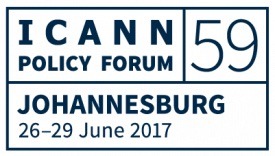 Would you like to share your ideas about DNSSEC or DANE with the wider community? Have you created a new tool or service? Have you found a way to use DNSSEC to secure some other service? Do you have new statistics about the growth or usage of DNSSEC, DANE or other related technology?
If so, and if you will be in Johannesburg, South Africa, for ICANN 59 in June 2017 (or can get there), please consider submitting a proposal to speak at the ICANN 59 DNSSEC Workshop!
Please send a brief (1-2 sentence) description of your proposed presentation to dnssec-johannesburg@isoc.org by Friday, 19 May 2017.
As with all of these sessions at ICANN meetings, it will be streamed live so that you can participate remotely if you will not be there in South Africa. (And I will note that this time I will not be attending in person.)
The full Call for Participation with more information and examples is below.
Call for Participation — ICANN DNSSEC Workshop at ICANN59 Policy Forum in Johannesburg, South Africa
The DNSSEC Deployment Initiative and the Internet Society Deploy360 Programme, in cooperation with the ICANN Security and Stability Advisory Committee (SSAC), are planning a DNSSEC Workshop at the ICANN59 Policy Forum 26-29 June 2017 in Johannesburg, South Africa. The DNSSEC Workshop has been a part of ICANN meetings for several years and has provided a forum for both experienced and new people to meet, present and discuss current and future DNSSEC deployments. For reference, the last Policy Forum DNSSEC Workshop was at the ICANN meeting in Helsinki, Finland on 27 June 2016. The presentations and transcripts are available at: https://icann562016.sched.com/event/7NCj/dnssec-workshop-part-1.
The DNSSEC Workshop Program Committee is close to finalizing the 3-hour program. Proposals will be considered for the following topic areas and included if space permits. In addition, we welcome suggestions for additional topics either for inclusion in the ICANN59 workshop, or for consideration for future workshops.
1. DNSSEC Deployment Challenges
The program committee is seeking input from those that are interested in implementation of DNSSEC but have general or particular concerns with DNSSEC. In particular, we are seeking input from individuals that would be willing to participate in a panel that would discuss questions of the nature:
— What are your most significant concerns with DNSSEC, e.g., implementation, operation or something else?
— What do you expect DNSSEC to do for you and what doesn’t it do?
— What do you see as the most important trade-offs with respect to doing or not doing DNSSEC?
We are interested in presentations related to any aspect of DNSSEC such as zone signing, DNS response validation, applications use of DNSSEC, registry/registrar DNSSEC activities, etc.
2. Preparation for Root Key Signing Key (KSK) Rollover
In preparation for the root KSK rollover, we would like to bring together a panel of people who can talk about what the potential impacts may be to ISPs, equipment providers and end users, and also what can be done to potentially mitigate those issues. In particular, we are seeking participation from vendors, ISPs, and the community that will be affected by distribution of new root keys. We would like to be able to offer suggestions out of this panel to the wider technical community. If you have a specific concern about the Root Key Rollover, or believe you have a method or solution to help address impacts, we would like to hear from you. For more information on the root KSK rollover see the guide at: https://www.icann.org/en/system/files/files/ksk-rollover-quick-guide-prepare-systems-03apr17-en.pdf.
If you are interested in participating, please send a brief (1-2 sentence) description of your proposed presentation to dnssec-johannesburg@isoc.org by Friday, 19 May 2017
Thank you,
Julie Hedlund
On behalf of the DNSSEC Workshop Program Committee:
Mark Elkins, DNS/ZACR
Jean Robert Hountomey, AfricaCERT
Jacques Latour, .CA
Xiaodong Lee, CNNIC
Russ Mundy, Parsons
Ondřej Surý, CZ.NIC
Yoshiro Yoneya, JPRS
Dan York, Internet Society
The post Call for Participation – DNSSEC Workshop at ICANN 59 in Johannesburg, South Africa appeared first on Internet Society.