Just a guy in Vermont trying to connect all the dots...

Dan York
Author's posts
May 11
Call for Participation – ICANN DNSSEC and Security Workshop at ICANN68 Virtual Policy Forum (Featured Blog)
If you are interested in speaking at the ICANN 68 DNSSEC Workshop, please send a brief (1-2 sentence) description of your proposed presentation to dnssec-kualalumpur@isoc.org by 29 May 2020. This online workshop will be Monday, 22 June 2020, from 02:00 – 04:30 UTC (10:00 – 12:30 Kuala Lumpur) We are doing something new this time and would like to get a feel for attendance for this virtual meeting. More...
May 11
Call for Participation – ICANN DNSSEC and Security Workshop at ICANN68 Virtual Policy Forum (Featured Blog)
If you are interested in speaking at the ICANN 68 DNSSEC Workshop, please send a brief (1-2 sentence) description of your proposed presentation to dnssec-kualalumpur@isoc.org by 29 May 2020. This online workshop will be Monday, 22 June 2020, from 02:00 – 04:30 UTC (10:00 – 12:30 Kuala Lumpur) We are doing something new this time and would like to get a feel for attendance for this virtual meeting. More...
Apr 22
Reflections on Earth Day 1990 – And How It Fundamentally Changed My Life
As we celebrate the 50th Anniversary of Earth Day today, April 22, 2020, my mind jumped back 30 years to "Earth Day 1990" in the state of New Hampshire. I made some choices that year and seized some opportunities that introduced me to the worlds of communications, community organizing, and public relations. I approached 1990 thinking I was going to be finishing up a Masters in Education degree and heading back to Connecticut to teach in a public high school. But life took very different turns and presented new opportunities. The choices I made then set me on the path that led to where I am 30 years later.
I reflected on all this in a podcast episode:
Happy Earth Day to you all!
P.S. See also this post I wrote today: On this 50th Earth Day, We Are Using The Internet To Change The World
Apr 22
TDYR 392 – Reflections on Earth Day 1990 and How It Fundamentally Changed My Life
On this 50th Anniversary of Earth Day, I look back 30 years and tell the story of how the events that led to Earth Day 1990, and the choices I made, fundamentally changed my life and set me on the path that led to where I am today...
See also this post: https://www.internetsociety.org/blog/2020/04/on-this-50th-earth-day-we-are-using-the-internet-to-change-the-world/
Apr 21
On this 50th Earth Day, We Are Using The Internet To Change The World
50 years ago when the first Earth Day happened, the networks that would later form the Internet were only beginning.
20 years later, when Earth Day 1990 turned the celebration into a global event, the World-Wide Web existed only as a single website in Switzerland.
Today, the Internet is our lifeline. In a world locked down by coronavirus, the Internet is how we connect. It is how we communicate, collaborate, and create together. It is how we work and how we play. And on this Earth Day 2020, we will use the Internet to celebrate the 50th anniversary.
Each and every day, we are using the Internet to respond to climate change and other environmental issues:
- Scientists are collaborating and sharing their knowledge. They are finding new solutions and creating new programs.
- Projects are crowdsourcing vast amounts of data from regular people around the world (ex. Earth Challenge 2020)
- We are sharing ideas and learning from each other.
- Policy makers are learning what works in other regions.
- We are avoiding unnecessary travel and reducing our carbon footprint.
- Activists are joining in global movements.
- We are seeing that what affects someone in one part of the world may affect us all.
This open, globally-connected network of networks empowers us to work for change. The Internet enables us to confront global challenges, whether those are viruses or a changing climate.
These many benefits do, of course, have costs. The Internet’s networks need electricity to operate. The data centers used by many services offered on the Internet can use huge amounts of power and water. All our many devices are leaving a long trail of discarded “e-waste”. These are challenges we all must confront.
We also face the reality that on this day, 49% of the world will not be able to join in the online celebrations. They are not able to work at home during this coronavirus crisis. They do not have the Internet access that most of us take for granted. The many opportunities of the Internet are not shared evenly – we must grow the Internet and connect the unconnected.
If we are to solve the many global challenges before us, we must tap into the creativity and ingenuity of people around the world. Everywhere. We must connect, communicate, and collaborate. We must share our ideas and innovations. We must learn from each other and help each other.
Now, more than ever, we must ensure that the Internet of opportunity is available to everyone.
We are stronger together. And through working together, we will find new ways to change the world.
Happy Earth Day!
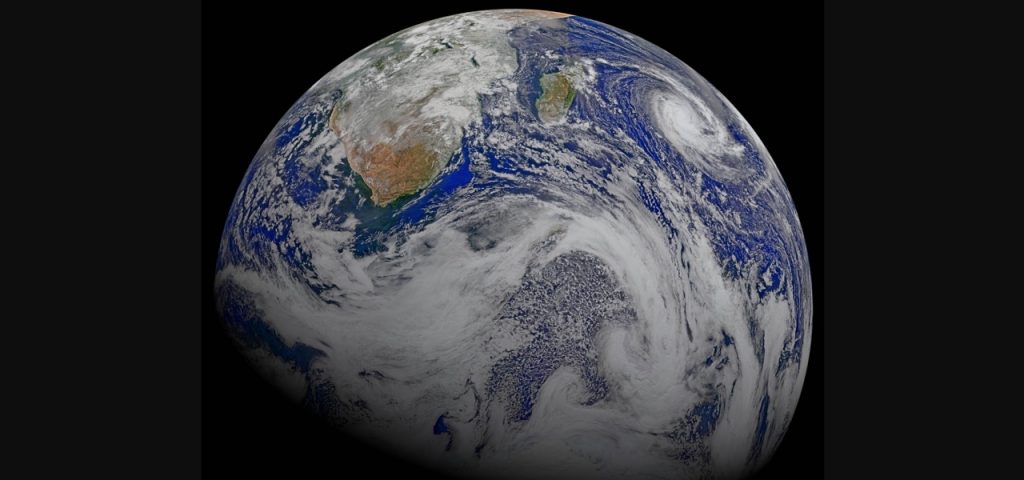
Image credit: NASA Image Library
The post On this 50th Earth Day, We Are Using The Internet To Change The World appeared first on Internet Society.
Apr 20
TDYR 391 – Taking a Coffee Break via Zoom and Slack during COVID-19 Pandemic
In a time of isolation, how can you use virtual coffee breaks to connect with others? In this episode, I talk about how people within my organization have used the combination of Zoom and Slack to have virtual coffee (or tea) breaks to connect with each other. I also offer some tips for someone wanting to do this within your organization...
Apr 15
TDYR 390 – On Why We Need To Write in Plain Language
Why do we write articles that people can't understand? How can we be more clear and concise in our writing? How can we reduce the load on the brains of our readers? In this episode I talk about how critically important it is to write in "plain language" so that you text can be understood by the widest number of readers. Some of the resources I mention include:
- http://www.hemingwayapp.com/
- https://en.wikipedia.org/wiki/Plain_language
- https://en.wikipedia.org/wiki/Plain_English
- https://plainlanguage.gov/
- https://plainlanguage.gov/resources/checklists/web-checklist/
What techniques and strategies do YOU find effective for writing in plain language?
Apr 08
TDYR – The COVID-19 Pandemic – Personal Reflections from Vermont
It’s been one month since the first positive case of COVID-19 was found in Vermont, where I live. In this episode I talk through some of my thoughts about what all is going on...
Mar 30
TDYR 388 – The joy of using the Internet to celebrate a wedding cancelled by the pandemic
Yesterday we had the joy of using the Internet to celebrate the relationship of two people whose wedding was cancelled due to the pandemic. In this episode I talk about how wonderful that celebration was... and how the Internet can be used to bring moments of joy amidst the chaos...
Mar 23
IETF 107 Starts Today as a Virtual Meeting
Later today, the 107th meeting of the Internet Engineering Task Force (IETF) will begin its working group sessions in an unconventional way. Previously, over 1,000 engineers were expected to be in Vancouver, Canada, to engage in the IETF’s work creating the open standards that make the Internet possible.
But with the global COVID-19 pandemic, the IETF leadership decided to cancel the in-person meeting in Vancouver. Instead a scaled-down, completely virtual meeting will take place. Only 12 of the IETF’s 115+ working groups will be meeting this week. Other working groups, and the research groups of the Internet Research Task Force (IRTF) may schedule interim meetings in the weeks and months ahead.
You can participate remotely in IETF 107. The steps are all outlined in this “Guide for IETF 107 Participants“. Useful resources include:
- IETF 107 Agenda
- IETF 107 Materials (slides, links to drafts)
To be clear, most of the work of the IETF in creating the Internet’s open standards ALREADY takes place online. People create “Internet-Draft” documents that propose new ways to make the Internet work better. Those documents are discussed and debated on email lists for working groups. Eventually those working groups reach “rough consensus” and the documents are published as “Requests For Comments” or simply “RFCs”.
However, sometimes people disagree about what would be best for the Internet. Sometimes people strongly disagree! Sometimes Working Groups just cannot make progress through email discussions.
And so three times a year, engineers from around the world gather in different locations to have face-to-face discussions. These are the “IETF meetings” such as the one this week. At these sessions, people can discuss and debate intensely. They can stand in long microphone lines to voice their points. They can hum in agreement or disagreement. They can also have side meetings, go to dinner or drinks with people, meet in hallways, and through all of that work out differences that help move Internet standards forward.
This week, some of those engineers (myself included) will be trying out a new model to see how well this can all work in a virtual setting.
Many thanks to the IETF leadership, secretariat, and support teams for all their work to make this “IETF 107 Virtual” happen! I am looking forward to seeing how it goes.
Please join in if you are interested in the work of the IETF!
P.S. If you are not aware of the connection between the IETF and the Internet Society, please read about our relationship.
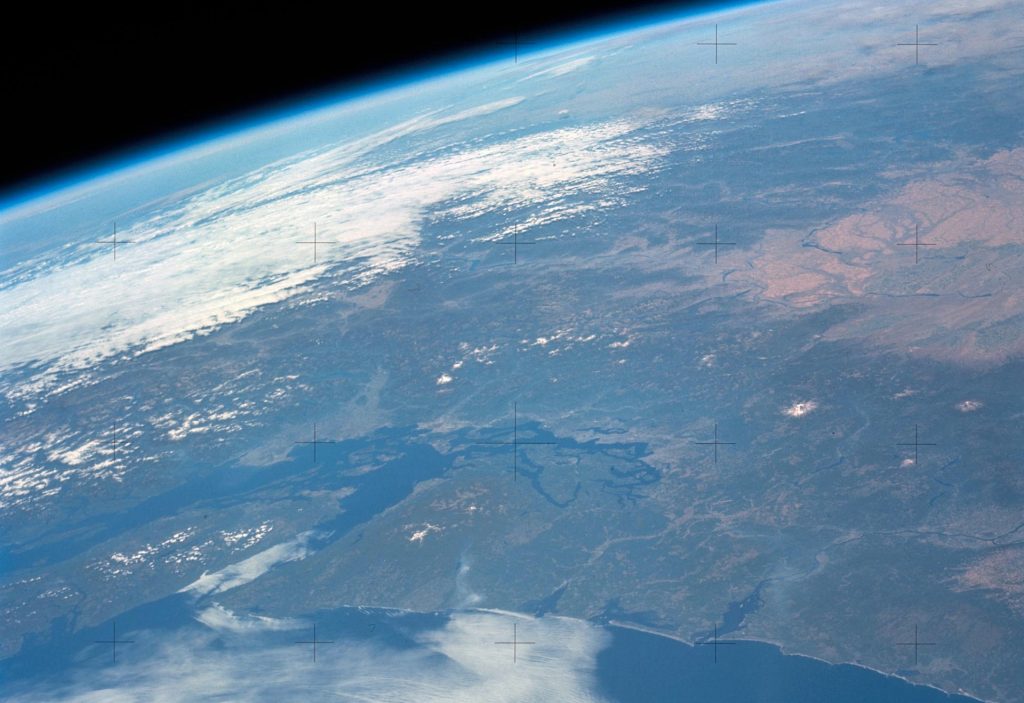
Image credit: a photo of Vancouver from NASA
The post IETF 107 Starts Today as a Virtual Meeting appeared first on Internet Society.